Investing | Canada

Covered Call ETFs in Canada Explained

Last updated May 6, 202610 min read
By Gourav KumarReviewed against current Canadian source materialEditorial standards
Article visualInvesting | Canada
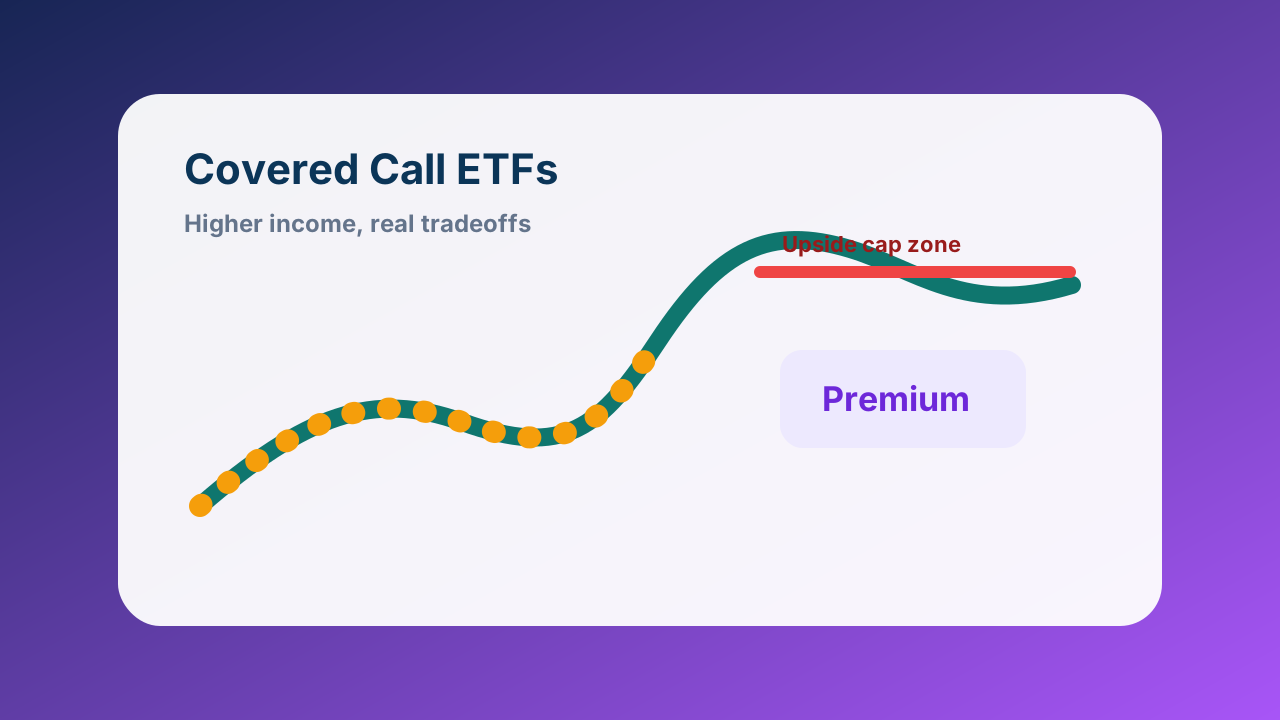
Covered call ETF illustration showing option premium income and upside cap zone

Covered Call ETFs in Canada Explained

Quick AnswerWhat is a covered call ETF?

A covered call ETF owns stocks or another portfolio and sells call options on some of those holdings to generate option income. The strategy can increase distributions, but it may limit upside in rising markets and does not protect investors from ordinary market losses.

  • Covered call ETFs can pay higher distributions because they collect option premiums.
  • The tradeoff is that some upside can be capped when markets rise strongly.
  • Higher yield does not mean lower risk or better total return.
  • Fees, option coverage, holdings, tax character, and distribution sustainability need review.

Covered call ETFs have become popular with Canadian income investors because their distributions can look much higher than plain index or dividend ETFs. The appeal is obvious: more monthly cash flow from a familiar ETF wrapper.

The tradeoff is less obvious. Covered calls exchange some future upside for option income today. That can be useful for certain income goals, but it can also underperform in strong markets and still fall when the underlying holdings decline.

How covered calls work

A call option gives another investor the right to buy an asset at a set price within a set period. When a fund sells a covered call, it receives an option premium while already owning the underlying asset. The position is covered because the fund owns what it may need to deliver.

If the asset price rises above the option strike price, some upside may be given away. If the asset does not rise enough, the fund may keep the premium and continue holding the asset. Either way, the ETF's result depends on the portfolio, option rules, market path, fees, and taxes.

Why distributions can be higher

Covered call ETFs collect option premiums, and those premiums can support larger cash distributions. This is why covered call yields often look higher than plain dividend ETFs or broad-market ETFs.

That cash flow is not magic. It is compensation for taking a tradeoff. Investors receive more current income but may give up some price appreciation if the underlying assets rise beyond the option strike price.

The upside tradeoff

Covered call strategies can lag in strong rising markets because part of the upside is exchanged for option premium. In flat or mildly rising markets, the premium may help. In falling markets, the premium may cushion returns somewhat, but it usually does not prevent losses.

This makes covered call ETFs different from plain dividend ETFs. Both can pay income, but the source of that income and the market behaviour can differ.

Market environmentPossible covered call behaviourInvestor takeaway
Strong rising marketMay lag because upside is cappedIncome can cost growth
Flat marketPremium income may helpStrategy may feel useful
Falling marketPremium may soften but not eliminate lossesStill risky
Volatile marketPremiums may be higherDistribution and price path can be complex

What Canadians should compare

Compare the ETF's underlying holdings first. A covered call ETF on Canadian banks is different from one on U.S. technology stocks, utilities, or a broad index. The option overlay does not remove the underlying exposure.

Then compare the percentage of the portfolio covered by calls, option frequency, MER, distribution history, tax character, trading volume, and whether the ETF uses leverage. A higher headline yield should trigger more due diligence, not less.

  • Underlying holdings and sector exposure.
  • Covered-call writing policy and coverage level.
  • MER and trading spread.
  • Distribution history and tax character.
  • Total return across different market periods.

Who might consider them

Covered call ETFs may appeal to investors who prioritize cash flow and understand that they may give up some growth. They may be used by retirees or income-focused investors, but they are not a universal replacement for broad-market ETFs.

They may be less suitable for investors whose main goal is maximum long-term growth, especially in accounts where TFSA or RRSP room is being used for decades of compounding.

Example scenario

Example: income versus upside

Assume a covered call ETF pays a simplified 8% distribution while a plain equity ETF pays 2%. The covered call ETF looks better if the only goal is current cash flow.

But if the market rises sharply, the plain ETF may capture more upside. The covered call ETF may still pay income, but its total return could lag because some upside was sold through options.

Common mistakes

Mistakes to avoid

Equating high yield with safety

Covered call ETFs can still fall in value and distributions can change.

Ignoring total return

A high payout can hide weaker price appreciation or underperformance in rising markets.

Skipping the option policy

Coverage level, strike selection, and frequency can meaningfully affect outcomes.

Using them for every goal

Income-oriented ETFs may not fit long-term growth money or every registered account plan.

Related tools and guides

Use these next

How this article was prepared

Last updated: May 6, 2026

This guide explains covered call ETFs using option-strategy basics, Canadian account context, distribution tradeoffs, total return, fees, and due diligence checks.

Assumptions

  • Examples are simplified CAD planning examples and do not forecast returns, income, tax refunds, or ETF performance.
  • ETF rules, holdings, fees, yields, and platform features change over time and should be checked on official provider pages before investing.
  • This article is general education for Canadian readers and does not consider personal risk tolerance, income, debt, family situation, or tax details.

Sources and review

Reviewed by: EasyFinanceTools editorial team

Educational information only. Confirm current account rules, ETF facts, tax treatment, and suitability with official documents or a qualified professional.

Review note

Educational content, source-led review

This page is written for Canadian readers and reviewed against official or primary sources where the topic depends on rules, tax treatment, or account mechanics. The goal is to explain the decision, not to recommend a product or predict returns.

Last reviewed: May 6, 2026How we review content

Author and review

Gourav Kumar

Founder of Easy Finance Tools

Independent Canadian personal finance tools creator focused on calculators, investing education, and beginner-friendly financial planning.

How this content is handled

Content is educational, reviewed against official Canadian sources where applicable, and updated when account rules, calculator assumptions, or source material changes. It is not professional financial advice.

Editorial standardsCalculator methodologyUpdated: May 6, 2026Investing | Canada

Educational disclaimer

This article is educational only and is not investment, tax, legal, or financial advice. ETFs, dividends, options strategies, and registered accounts can involve risk, changing rules, fees, taxes, and losses. Nothing here is a recommendation to buy or sell a security.

FAQ

Frequently asked questions

Are covered call ETFs safe?

They can reduce or change some return patterns, but they are still market investments and can lose value.

Why do covered call ETFs pay high yields?

They collect option premiums by selling call options. The income comes with an upside tradeoff.

Do covered call ETFs beat regular ETFs?

Not always. They can lag in strong rising markets and should be compared by total return, not only income.

Are covered call ETFs good in a TFSA?

It depends on the goal. Using TFSA room for income may be reasonable for some investors, but long-term growth investors should understand the opportunity cost.

Back to Blog