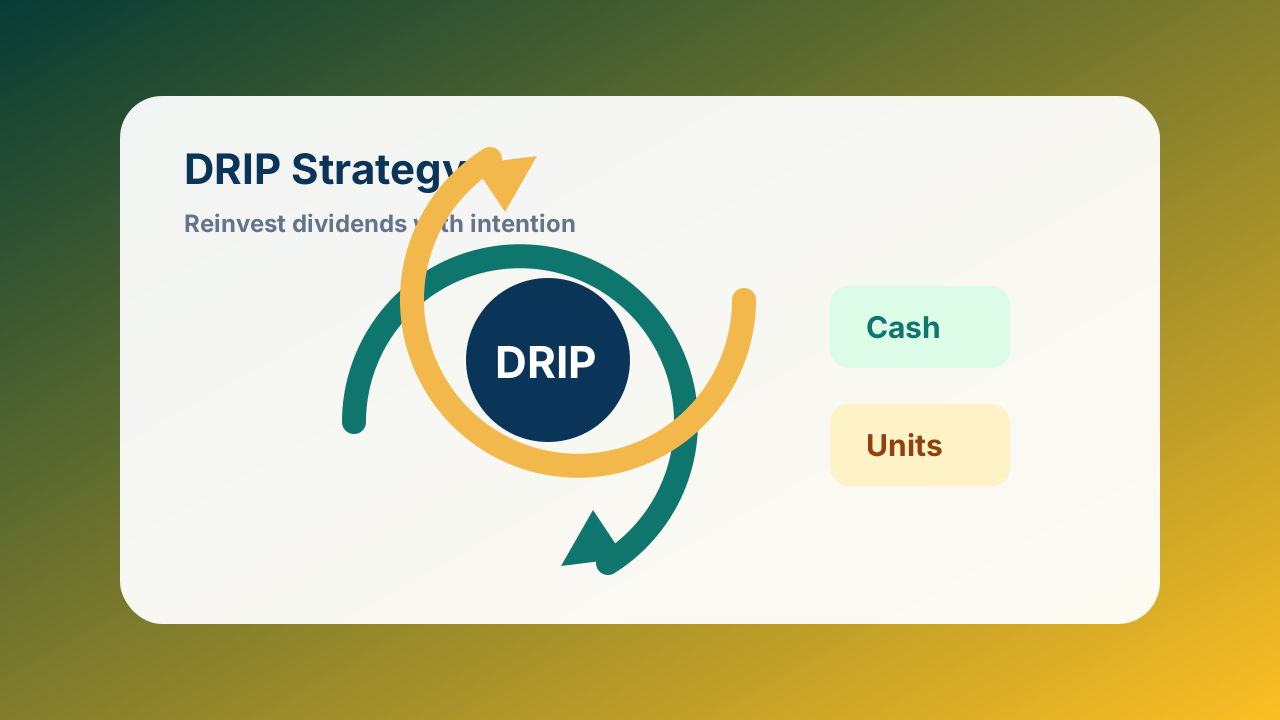
Dividend reinvestment plans are popular because they make compounding feel automatic. Instead of collecting a dividend as cash, the payment is used to buy more of the same stock or ETF. Over time, those extra shares can produce more dividends of their own.
For Canadian investors, the details matter. A DRIP inside a TFSA or RRSP feels different from a DRIP inside a taxable account. A company-operated DRIP is not the same as a synthetic DRIP at a broker. And reinvesting every payout is not always better than taking cash and rebalancing deliberately.
This guide explains how DRIPs work in Canada, where they can help, where they can backfire, and how to think about taxes, adjusted cost base, broker rules, and portfolio concentration before turning reinvestment on.
What is DRIP investing?
DRIP stands for dividend reinvestment plan. The basic idea is simple: when a stock or ETF pays a dividend or distribution, that cash is used to buy more shares or units instead of sitting as cash in the account.
The appeal is automation. If you were planning to reinvest the dividend anyway, a DRIP can reduce friction and help keep the money working. The tradeoff is that automatic reinvestment can also hide decisions you should still make, such as whether the holding is still the right size in your portfolio.
- Cash dividend is paid by a company or ETF.
- The plan uses the cash to buy additional shares or units.
- Future dividends are calculated on a larger number of shares or units.
- The compounding effect grows slowly at first and becomes more visible over long periods.
Company DRIP vs synthetic brokerage DRIP
A direct or company DRIP is normally connected to a company's own plan, often administered through a transfer agent. These plans may have their own enrollment rules, paperwork, minimum share requirements, purchase fees, or discounts. They can be useful for investors who want to build a position in a specific company, but they are not the easiest workflow for everyone.
A synthetic DRIP is offered through a brokerage. In that setup, the company or ETF pays cash into your account, and the broker uses that cash to buy more shares or ETF units according to its DRIP rules. For many Canadians using ETFs in a TFSA, RRSP, or non-registered account, this is the version they are most likely to encounter.
The important detail is that broker rules vary. Some brokers reinvest only when there is enough cash to buy a whole share or unit. Others may support fractional reinvestment for certain securities. Always check the current broker policy before assuming every dollar will be reinvested.
| Type | How it usually works | Main thing to check |
|---|---|---|
| Company DRIP | Investor enrolls in a plan connected to one company | Minimums, fees, discounts, paperwork, and transfer-agent rules |
| Synthetic broker DRIP | Broker reinvests eligible dividends or ETF distributions inside the account | Whether the broker buys whole or fractional shares and which securities qualify |
| Manual reinvestment | Investor lets dividends accumulate as cash, then chooses what to buy | Trading costs, discipline, and whether cash sits idle for too long |
How a DRIP compounds over time
A DRIP does not create a special return by itself. It simply reinvests cash distributions automatically. The compounding comes from owning more shares or units after each reinvestment, which can produce more future distributions if the investment keeps paying.
The effect depends on yield, price movement, distribution growth, fees, taxes, and time. If the investment performs poorly, a DRIP can also keep adding to a losing or overly concentrated position. That is why reinvestment should be paired with periodic portfolio review.
- Higher yield can increase reinvestment speed, but high yield can also come with higher risk.
- Dividend growth can improve long-term cash flow, but payouts are not guaranteed.
- Price changes affect how many shares each dividend can buy.
- Taxes in a non-registered account can reduce the amount you can truly reinvest after filing.
DRIP taxes in Canada
A common Canadian tax mistake is assuming reinvested dividends are not taxable because the investor did not receive cash in a bank account. In a non-registered account, dividends and fund distributions can still be taxable even if they are immediately reinvested.
Canadian-source dividends are usually reported on tax slips and may be eligible or other-than-eligible dividends. Eligible Canadian dividends can qualify for the dividend tax credit, but the exact tax outcome depends on the account, province, income level, and the type of dividend or distribution reported.
For mutual funds and ETFs held in a taxable account, reinvested distributions can also affect adjusted cost base. The CRA notes that reinvested distributions can change the average cost per unit or share. If you sell later, poor ACB tracking can lead to incorrect capital-gains reporting.
- Inside a TFSA, Canadian tax on qualified investment income is generally sheltered while funds remain in the account and qualified withdrawals are tax-free.
- Inside an RRSP, investment income is generally tax-deferred, but withdrawals are taxable as income later.
- Inside a taxable account, dividends and distributions can create annual tax reporting even when reinvested.
- Foreign dividends do not qualify for the Canadian dividend tax credit.
When reinvesting dividends can make sense
A DRIP often makes the most sense when the investor is still in the accumulation phase, still wants more exposure to the same holding, and does not need the dividend cash for spending. This is common for younger investors using a TFSA or RRSP to buy broad ETFs for long-term growth.
It can also help investors who struggle to reinvest manually. If cash tends to sit unused for months, automation can improve consistency. The best DRIP setup is usually the one that supports a plan you already believe in, not one that encourages you to keep buying a holding without review.
- You want long-term compounding and do not need the dividend cash today.
- The holding still fits your target allocation.
- The account type makes reinvestment simple from a tax and tracking perspective.
- The broker's DRIP rules are clear and do not create surprise cash leftovers.
When taking dividends as cash may be better
Taking dividends as cash is not a failure. Cash distributions can be useful when you are drawing income, rebalancing, paying taxes, or intentionally redirecting cash toward underweight parts of the portfolio.
Manual reinvestment gives more control. Instead of automatically buying the same holding, you can decide whether to add to a different ETF, build cash for a near-term goal, pay down debt, or rebalance away from a position that has grown too large.
- You are retired or using portfolio cash flow for spending.
- You want to rebalance across several holdings instead of buying the same one.
- A taxable account requires cash to pay tax on dividends or distributions.
- A holding has become too large or no longer fits your plan.
DRIP checklist for Canadian investors
Before enabling a DRIP, slow down and check the account, security, tax, and allocation details. A five-minute review can prevent years of quiet drift.
The right question is not simply whether DRIPs are good. The better question is whether automatic reinvestment is good for this holding, in this account, for this stage of your plan.
- Confirm the investment still fits your long-term plan.
- Check whether the DRIP buys whole shares only or supports fractional reinvestment.
- Know whether the account is TFSA, RRSP, FHSA, or taxable.
- Track adjusted cost base carefully in taxable accounts.
- Review concentration at least once or twice per year.
- Compare DRIP growth against your broader compound-interest plan.