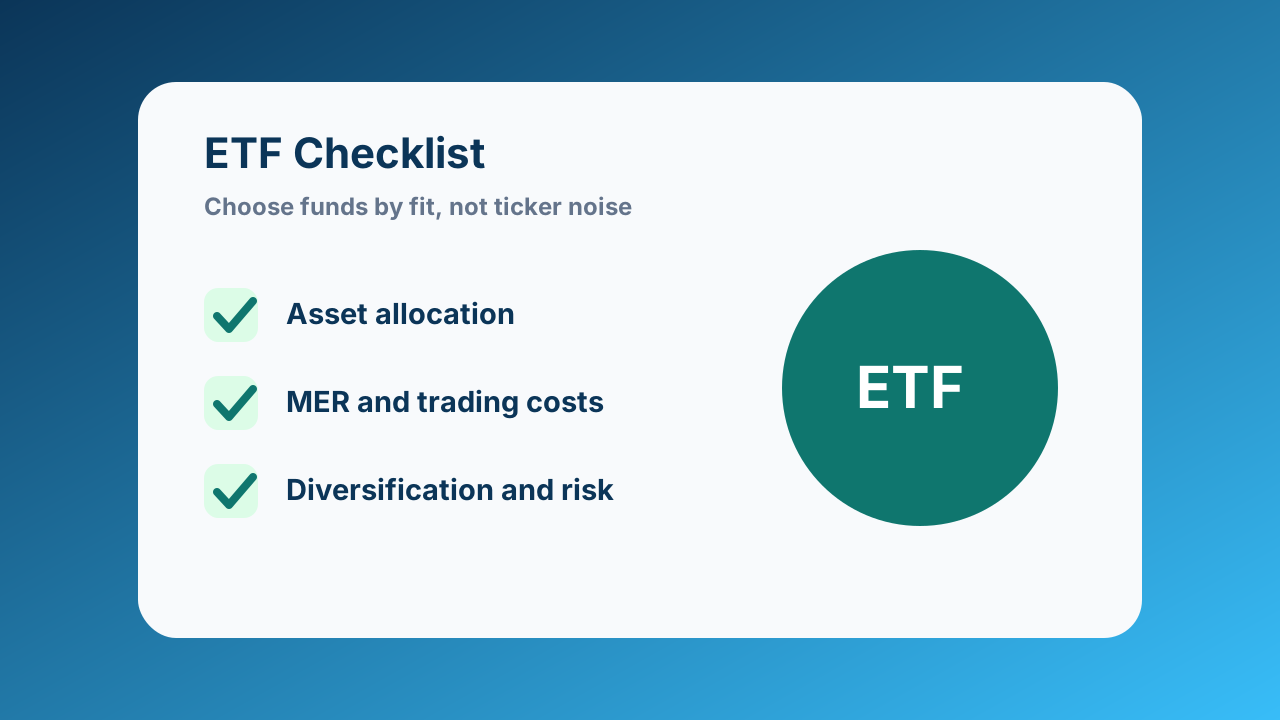
Choosing ETFs in Canada can feel harder than it should because there are so many tickers that look similar. One fund owns the whole market, another owns dividend stocks, another owns U.S. stocks, another hedges currency, and another bundles stocks and bonds into an all-in-one portfolio.
A useful ETF process starts before the ticker. Decide what account you are using, what goal the money serves, how much risk you can handle, and how simple the portfolio needs to be. Then compare funds with a checklist.
Start with the account and goal
The same ETF can make sense in one account and feel awkward in another. A TFSA is flexible and tax-sheltered for qualified withdrawals. An RRSP is often retirement-focused and creates taxable withdrawals later. An FHSA is designed for eligible first-home buyers. A taxable account can add annual reporting and adjusted cost base tracking.
The goal also matters. Money needed in two years should not be treated like retirement money needed in 30 years. Before choosing ETFs, decide whether the money is for long-term investing, near-term savings, retirement, a home down payment, or income.
Choose asset allocation before ticker
Asset allocation is the mix of stocks, bonds, cash, and other assets. It usually matters more than the specific ETF brand. A 100% stock ETF can behave very differently from a balanced ETF that holds stocks and bonds.
Many Canadian beginners use all-in-one ETFs because they combine multiple asset classes in one fund. Others build a portfolio from separate Canadian, U.S., international, and bond ETFs. Separate ETFs can give more control, but they also require more rebalancing discipline.
| ETF approach | Why people use it | Tradeoff |
|---|---|---|
| All-in-one ETF | Simple one-ticket portfolio | Less customization |
| Separate stock and bond ETFs | More control over allocation | Requires rebalancing |
| Dividend ETF | Visible income stream | Can be sector concentrated |
| Thematic ETF | Targeted exposure | Higher risk of chasing trends |
Compare fees and trading costs
The management expense ratio is the ongoing cost of the ETF. It is built into fund performance rather than charged as a separate monthly bill. Over time, lower fees can leave more return for the investor, especially when two funds provide similar exposure.
Trading costs also matter. Some platforms charge commissions for ETF trades, some offer commission-free ETF buying, and bid-ask spreads can still create costs. For small recurring contributions, trading friction can matter more than it looks.
Check diversification and overlap
An ETF can own hundreds of securities and still be concentrated in one country, sector, or strategy. Canadian dividend ETFs, for example, may lean heavily toward financials, energy, utilities, and telecom. U.S. equity ETFs may have large technology exposure.
Overlap happens when multiple ETFs own many of the same companies. Buying three ETFs does not automatically mean you are diversified if they all hold similar stocks. Review holdings before adding complexity.
Review currency and tax complexity
Canadian-listed ETFs may hold Canadian assets, U.S. assets, international assets, or a mix. Some hedge currency exposure and some do not. Currency movement can affect returns even when the underlying stocks perform well.
Tax complexity depends on the account and fund structure. In registered accounts, annual Canadian tax reporting is usually simpler. In taxable accounts, distributions, capital gains, foreign income, and return of capital can require more recordkeeping.
Use a repeatable ETF checklist
A checklist helps prevent random ticker collecting. Before buying, write down what the ETF is supposed to do, why it belongs in the account, what it costs, what it owns, and what would make you sell or stop buying it.
If you cannot explain the ETF in plain language, keep researching. The goal is not to own the most impressive list of funds. The goal is to own a portfolio you understand well enough to keep using.
- What goal does this ETF serve?
- Which account will hold it?
- What asset class and region does it cover?
- What is the MER and distribution policy?
- What are the top holdings and sector weights?
- How would it behave in a market decline?