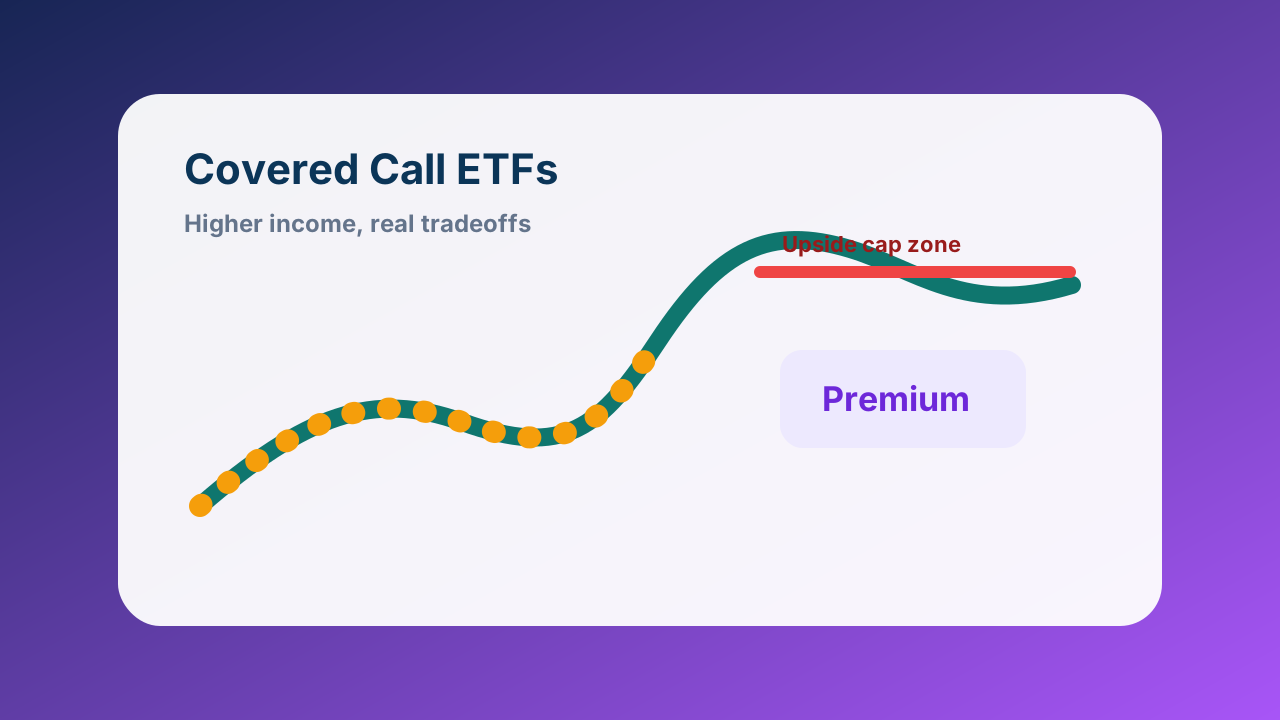
Covered call ETF taxes can be confusing because the headline yield rarely tells you what kind of income you are receiving. Two ETFs with similar distributions can produce different tax slips and different after-tax results.
The practical Canadian question is account location. A covered call ETF in a TFSA, RRSP, or taxable account can produce very different tax and recordkeeping issues. This guide explains what to check without pretending there is one best account for every investor.
The tradeoff: high distributions vs tax character
Covered call ETFs often pay distributions that look attractive. But the tax character of those distributions can vary. A distribution may include Canadian dividends, foreign income, capital gains, option-related amounts, interest-like income, or return of capital depending on the ETF and year.
That mix matters most in taxable accounts because it affects reporting, adjusted cost base, and after-tax return. In registered accounts, the wrapper can simplify annual reporting, but the investment still needs to fit the account's purpose.
| Account | Tax/reporting angle | Main decision |
|---|---|---|
| TFSA | Qualifying withdrawals are generally tax-free in Canada | Is scarce TFSA room best used for income or growth? |
| RRSP | Current tax is deferred; withdrawals are generally taxable later | Does income strategy support retirement after-tax planning? |
| Taxable | Distribution character and ACB tracking can matter | Is after-tax income worth the complexity? |
| FHSA | First-home timeline usually dominates | Does the investment risk fit down-payment timing? |
The math: distribution yield is before tax and before total return
A fund's distribution yield is not the same as after-tax return. A taxable investor may owe different amounts depending on the distribution type. Even before tax, total return includes both cash distributions and price movement.
Return of capital deserves special attention. ROC can be tax-deferred in the current year, but it can reduce adjusted cost base. That may increase a future capital gain or create other tracking issues. ROC is not automatically bad, but it should not be mistaken for free income.
For tax planning, use actual tax slips, ETF year-end tax breakdowns, and your own records. Avoid relying only on marketing yield or monthly payout rate.
The context: TFSA, RRSP, and taxable accounts
In a TFSA, covered call ETF distributions may feel clean because qualifying withdrawals are generally tax-free in Canada. The tradeoff is whether the TFSA is being used for income at the expense of long-term growth.
In an RRSP, current distributions can compound tax-deferred, but withdrawals are generally taxable later. That can make the account administratively simpler today while still requiring retirement withdrawal planning.
In a taxable account, the tax character of distributions matters more. Canadian eligible dividends, foreign income, capital gains, and ROC can all have different reporting and after-tax implications. This is where investors most often need better records and professional tax help.
- Check ETF tax breakdowns, not only distribution yield.
- Track adjusted cost base if holding in a taxable account.
- Verify foreign-income treatment and withholding-tax caveats.
- Compare after-tax return against simpler ETF alternatives.
The next path: choose the account before the fund
The safer workflow is account first, fund second. Decide whether the money belongs in a TFSA, RRSP, FHSA, or taxable account based on timeline, tax situation, contribution room, and liquidity needs. Then decide whether a covered call ETF fits that account job.
If the fund is being considered mainly because the payout looks high, slow down. Use a dividend calculator for yield sensitivity, then review total return, fees, holdings, distribution history, and tax character.