Dividends | Canada

DRIP Strategy Canada: When to Reinvest Dividends

Last updated May 6, 20269 min read
By Gourav KumarReviewed against current Canadian source materialEditorial standards
Article visualDividends | Canada
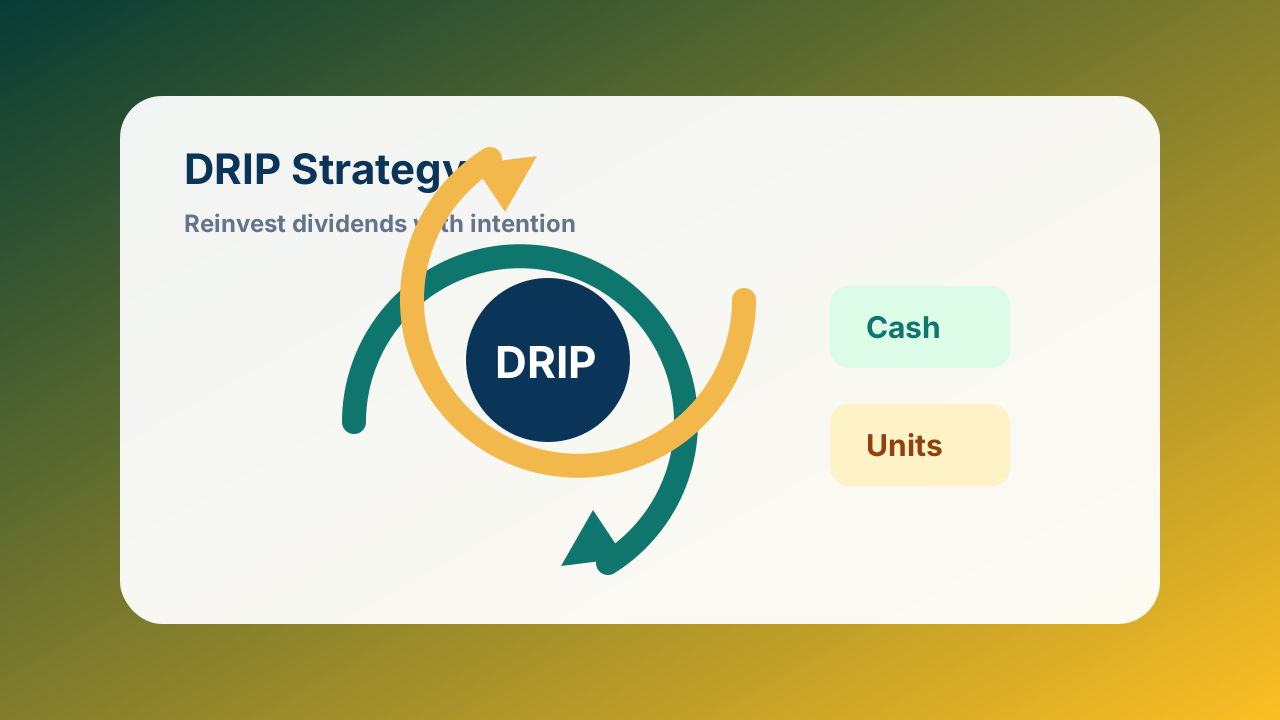
DRIP strategy illustration showing dividends cycling into more ETF units

DRIP Strategy Canada: When to Reinvest Dividends

Quick AnswerWhen should Canadians use a DRIP strategy?

A DRIP strategy can make sense when you are accumulating, do not need the cash, still want more of the same holding, and can handle the tax and concentration details. Taking dividends as cash may be better when you need income, want to rebalance, or hold investments in a taxable account that requires recordkeeping.

  • DRIP is a reinvestment workflow, not a guaranteed-return strategy.
  • Registered accounts usually make DRIP administration simpler than taxable accounts.
  • Cash dividends can be useful for rebalancing instead of automatically buying the same holding.
  • Review concentration regularly if automatic reinvestment is turned on.

A DRIP strategy sounds automatic: turn on dividend reinvestment, buy more units, repeat for years. For some Canadian investors, that is a perfectly reasonable way to keep money invested. For others, it quietly creates concentration, tax tracking, or cash-flow problems.

This guide focuses on the strategy decision. If you need a detailed explanation of how DRIPs work mechanically, start with the full dividend reinvestment plans guide. Here, the question is when reinvesting is better than taking the cash.

DRIP is a tool, not a plan

A dividend reinvestment plan only decides what happens to cash distributions. It does not decide whether the investment is good, diversified, cheap, tax-efficient, or appropriate for the account.

The plan comes first. If the holding still belongs in the portfolio and you want more of it, DRIP can reduce friction. If the holding is already too large or no longer fits, automatic reinvestment can make the problem bigger.

When reinvesting dividends can work well

Reinvesting often fits accumulation-stage investors who have a long timeline and do not need portfolio income. It can be especially convenient inside a TFSA or RRSP where annual tax reporting is usually simpler than in taxable accounts.

It can also help investors who would otherwise let cash sit idle. If the alternative is forgetting to reinvest for months, a DRIP can keep the contribution habit cleaner.

  • You want more of the same ETF or stock.
  • The account is for long-term growth, not near-term spending.
  • The investment is still within your target allocation.
  • The broker's DRIP rules are clear.

When taking dividends as cash can be better

Cash is useful when you are retired, drawing income, paying taxes, saving for a short-term goal, or rebalancing. Automatic reinvestment is not a moral victory if it forces you to sell something else later.

Taking distributions as cash also gives you control. You can add to underweight ETFs, pay down debt, keep a cash buffer, or wait until you have enough to make a deliberate purchase.

Registered vs taxable accounts

Inside a TFSA or RRSP, a synthetic brokerage DRIP can be administratively simple because you usually do not report each distribution annually on a personal tax return. The account rules still matter, but the reinvestment workflow is cleaner for many investors.

Inside a taxable account, reinvested dividends and fund distributions can still be taxable. They may also affect adjusted cost base. If you use DRIP in a taxable account, recordkeeping becomes part of the strategy.

Rebalancing and concentration

DRIP automatically buys the same holding that paid the distribution. That can be useful for a broad all-in-one ETF. It can be less ideal for a single stock or sector-heavy dividend ETF that is already a large part of the portfolio.

A simple rule is to review allocation at least once or twice a year. If one holding has grown too large, cash dividends may be better directed elsewhere.

SituationDRIP may fitCash may fit
Broad ETF in TFSALong-term accumulationIf rebalancing elsewhere
Single dividend stockSmall position you still wantIf position is already large
Taxable ETFOnly with strong recordsIf ACB tracking is a burden
Retirement withdrawalsLess commonWhen cash flow is needed

Example scenario

Example: DRIP vs cash for rebalancing

Sofia owns a Canadian dividend ETF and a global equity ETF. The dividend ETF has grown from 25% to 38% of her portfolio. If she leaves DRIP on, every distribution buys more of the already-large position.

Taking distributions as cash lets Sofia redirect new money to the global ETF until the portfolio is closer to target. The dividend income is still useful, but it supports rebalancing instead of concentration.

Common mistakes

Mistakes to avoid

Assuming DRIP is always better

Automatic reinvestment can be helpful, but cash can be better for taxes, spending, or rebalancing.

Ignoring taxable-account records

Reinvested distributions can still be taxable and can affect adjusted cost base.

Never reviewing allocation

DRIP can quietly add to positions that are already too large.

Forgetting broker limitations

Some brokers only reinvest whole shares or only support eligible securities.

Related tools and guides

Use these next

How this article was prepared

Last updated: May 6, 2026

This article evaluates DRIP strategy from a Canadian account-planning perspective, focusing on accumulation, income needs, rebalancing, taxable-account records, and broker rules.

Assumptions

  • Examples are simplified CAD planning examples and do not forecast returns, income, tax refunds, or ETF performance.
  • ETF rules, holdings, fees, yields, and platform features change over time and should be checked on official provider pages before investing.
  • This article is general education for Canadian readers and does not consider personal risk tolerance, income, debt, family situation, or tax details.

Sources and review

Reviewed by: EasyFinanceTools editorial team

Educational information only. Confirm current account rules, ETF facts, tax treatment, and suitability with official documents or a qualified professional.

Review note

Educational content, source-led review

This page is written for Canadian readers and reviewed against official or primary sources where the topic depends on rules, tax treatment, or account mechanics. The goal is to explain the decision, not to recommend a product or predict returns.

Last reviewed: May 6, 2026How we review content

Author and review

Gourav Kumar

Founder of Easy Finance Tools

Independent Canadian personal finance tools creator focused on calculators, investing education, and beginner-friendly financial planning.

How this content is handled

Content is educational, reviewed against official Canadian sources where applicable, and updated when account rules, calculator assumptions, or source material changes. It is not professional financial advice.

Editorial standardsCalculator methodologyUpdated: May 6, 2026Dividends | Canada

Educational disclaimer

This article is educational only and is not investment, tax, legal, or financial advice. ETFs, dividends, options strategies, and registered accounts can involve risk, changing rules, fees, taxes, and losses. Nothing here is a recommendation to buy or sell a security.

FAQ

Frequently asked questions

Is DRIP good for long-term investing?

It can be, if the investment still fits the plan and you do not need the cash. It is not automatically better in every account.

Should I DRIP in a taxable account?

Only if you are comfortable tracking taxable distributions and adjusted cost base. Many investors prefer taking cash for simpler control.

Can DRIP make a portfolio less diversified?

Yes. It can keep adding to the same holding or sector-heavy ETF.

Does DRIP avoid tax in Canada?

No. In taxable accounts, reinvested dividends and distributions can still be taxable.

Back to Blog